
_edited_edited_e.png)
From First Steps to the School Dance: Jada’s Pediatric AFO Success Story

Small Steps, Big Confidence: How an AFO Helped Jada Find Her Rhythm
Sometimes progress doesn’t arrive loudly. It shows up quietly, in steadier steps, in longer playtime, in the moment a child forgets to be careful and just moves.
When Jada first came to our Joliet clinic, walking wasn’t easy. Every step required focus. Balance didn’t come naturally. Confidence followed even further behind. She was doing her best, but her body hadn’t quite caught up to her curiosity yet.
She didn’t come alone. By her side was her foster mom, Dana, steady and attentive in the way that matters most, not rushing, not worrying out loud, just there. Together, they were looking for support. Not something flashy. Not a quick fix. Just something that could help Jada move through her world with a little more ease.
At Bionic Prosthetics & Orthotics, that’s where our work begins.
When Walking Feels Like Work
For many children, movement is instinctive. They run before they think. Jump before they hesitate. But for some kids, walking takes effort. Balance has to be learned consciously. Muscles work harder than they should. Fatigue shows up early.
That was Jada’s reality.
The goal wasn’t to change who she was. It was to support how she moved.
After careful evaluation and a lot of listening, our care team recommended a custom AFO (Ankle-Foot Orthosis). Not as a restriction, but as a guide. Something designed to support alignment, improve stability, and reduce the effort her body was putting into every step. An AFO doesn’t replace movement. It supports it, quietly, consistently, and patiently.
More Than a Brace, A Foundation
Jada’s AFO was custom-made for her, shaped to fit her needs, her body, and her pace of growth. It wasn’t about forcing her into a pattern. It was about giving her a foundation she could trust.
At first, progress looked small:
Longer walks without stopping
Standing with less wobble
A posture that felt more natural
These changes are easy to overlook if you’re only watching for big milestones. But in pediatric orthotic care, small changes are often the ones that matter most.
Because they build confidence.
The Moment Confidence Takes Over
Confidence doesn’t announce itself. It sneaks in.
For Jada, it showed up when walking turned into running. When careful steps turned into jumping. When balance stopped being a concern and became an afterthought.
Before long, she was riding her new bike, something that once felt out of reach. She was moving faster, laughing harder, trusting her body more.
And then came a moment that said everything.
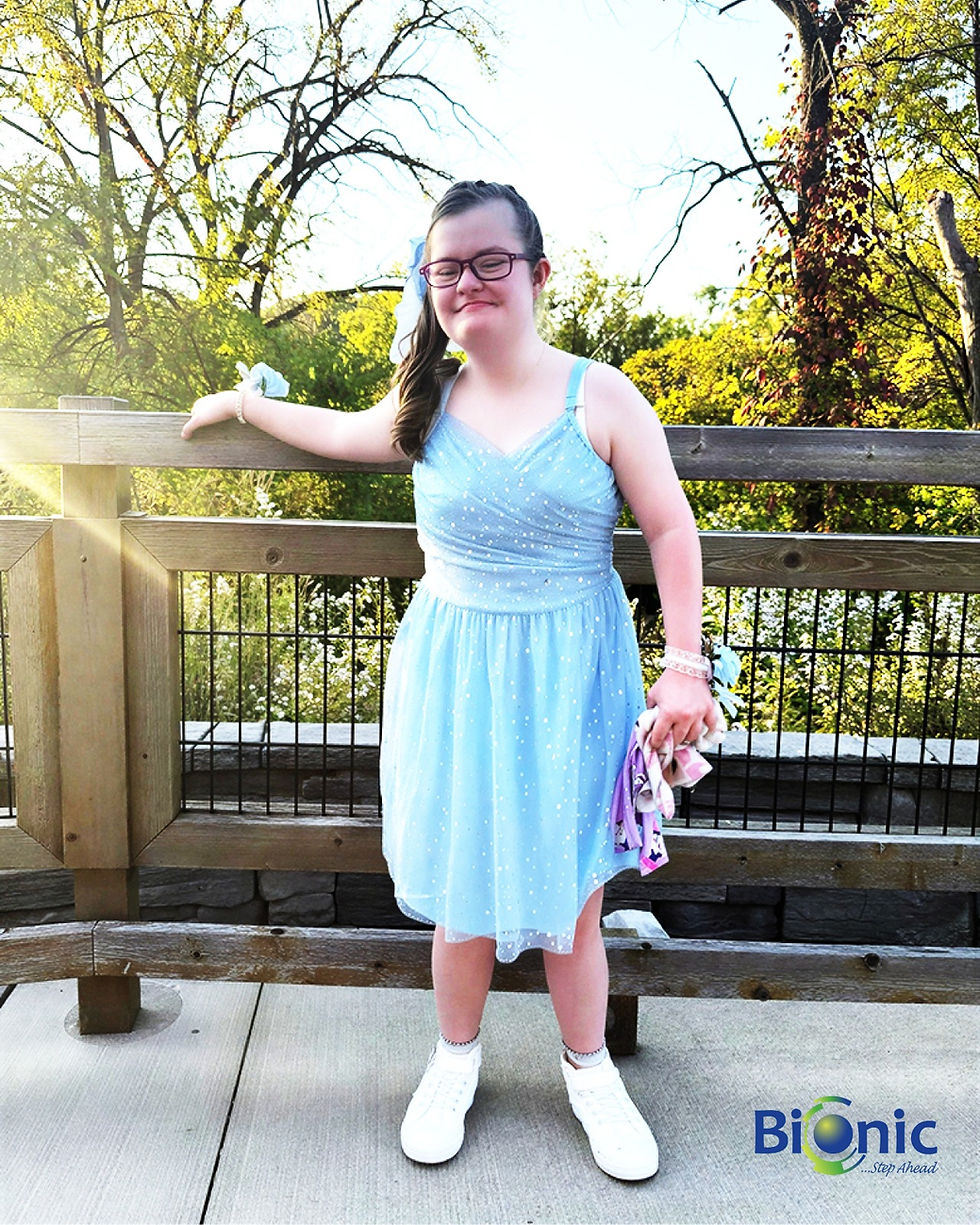
Jada danced at her school’s Homecoming.
Not cautiously. Not on the sidelines. But fully present, wearing her molded inner boot, her favorite cute shoes, and a smile that didn’t need explanation.
That’s the quiet power of an AFO when it’s prescribed early, designed thoughtfully, and supported by people who believe in a child’s potential.

Why Early Orthotic Support Matters
An AFO isn’t about limiting childhood. It’s about protecting it.
Early orthotic support can:
Improve alignment and balance
Reduce unnecessary strain on growing muscles
Help children move with less effort
Support confidence during critical developmental years
But just as important as the device is the care around it. The follow-ups. The adjustments. The conversations with caregivers. The reassurance that progress doesn’t have to be rushed.
Dana’s support, Jada’s determination, and a care team focused on listening made all the difference.
At Bionic P&O, our ABC-certified orthotists don't just deliver a device; we provide ongoing adjustments to keep up with growth spurts and changing activity levels.
A Community That Believes in Small Wins
At Bionic Prosthetics & Orthotics, pediatric care is never just about orthotics. It’s about the child behind the device and the adults supporting them every day.
It’s about noticing when shoes matter as much as support. When comfort matters as much as correction. When confidence matters as much as clinical outcomes.
Jada’s story isn’t about overcoming something. It’s about being supported early enough to grow into what was already there.
Big Futures Are Built on Small Steps
Today, Jada is doing what kids are meant to do, running, jumping, riding, dancing. Her AFO doesn’t define her. It supports her while she defines herself.
And that’s the goal.
Because when a child trusts their movement, the world opens up in ways that don’t need to be measured.
Sometimes all it takes is the right support, at the right time, and a community that believes in every small step along the way.
Looking for Pediatric AFO Support?
If your child is struggling with balance, walking, or fatigue, early orthotic care can make a meaningful difference.
Connect with the Bionic Prosthetics & Orthotics team to learn how a custom AFO can support your child’s movement, confidence, and growth, one small step at a time.
FAQs
1. What is an AFO?
An AFO (Ankle-Foot Orthosis) is a custom-made brace that supports the foot and ankle to improve stability, alignment, and walking efficiency. It’s commonly used in children who need extra support while their bodies are still developing.
2. How does an AFO help children walk more confidently?
An AFO helps guide the foot and ankle into a more stable position, which reduces wobbling, improves balance, and lowers the effort needed to walk. When movement feels easier, confidence often follows naturally.
3. Will an AFO limit my child’s movement or play?
No, A properly fitted AFO is designed to support movement, not restrict it. Many children run, jump, ride bikes, and participate in school activities while wearing their AFO comfortably.
4. When should a child be evaluated for an AFO?
If a child struggles with balance, tires easily while walking, trips frequently, or avoids physical activity, an evaluation may be helpful. Early support can make a meaningful difference during important developmental years.
5. How long does a child usually need to wear an AFO?
Every child is different. Some wear an AFO for a shorter period, while others need support longer as they grow. Regular follow-ups allow the orthotics team to adjust the AFO as the child’s needs change.
6. Are AFOs custom-made for each child?
Yes, Pediatric AFOs are custom-designed based on the child’s anatomy, movement patterns, and growth needs. Comfort, fit, and flexibility are key parts of successful orthotic care.
7. Can children wear regular shoes with an AFO?
In most cases, yes. Many AFOs are designed to fit inside everyday footwear. Finding shoes a child likes and feels comfortable in is an important part of building confidence and consistency.
8. How do I know if an AFO is working?
Parents often notice small but meaningful changes first, steadier steps, longer playtime, improved posture, and less fatigue. Confidence usually builds gradually as movement becomes more natural.
9. Why is early AFO support important?
Early AFO use can help guide healthy movement patterns, reduce strain on growing muscles, and support confidence during key stages of development. Small changes early on can lead to bigger long-term benefits.
10. Where can I find pediatric AFO care near me?
Working with a clinic that specializes in pediatric orthotics and offers ongoing follow-up is important. At Bionic Prosthetics & Orthotics, care focuses on the child’s comfort, growth, and confidence, not just the device.


Comments