
_edited_edited_e.png)
What Is a Prosthetic Arm? A Complete Introduction for New Amputees

Updated: Mar 6

Losing an arm, whether from trauma, disease, or a condition you were born with, changes the way you interact with the world. Tasks you never thought twice about, like opening a door, holding a cup of coffee, or hugging a loved one, suddenly feel different.
A prosthetic arm is an artificial device designed to replace a missing upper limb and restore as much function, comfort, and independence as possible. Today’s prosthetic technology has come a long way from the hooks and harnesses of decades past. Modern prosthetic arms can mimic natural hand movements, respond to muscle signals, and even provide sensory feedback.
If you or a family member is beginning this journey, this guide will walk you through the basics, what a prosthetic arm is, how it works, what it’s made of, and what you can realistically expect from one.
How Common Is Upper-Limb Loss in the United States?
You are not alone. According to a 2024 study published in the Archives of Rehabilitation Research and Clinical Translation, an estimated 2.3 million Americans are currently living with limb loss. While the majority of amputations involve the lower extremities, approximately 9% involve the upper limbs, including fingers, hands, forearms, and full arms. (link)
Upper-limb amputations are most commonly caused by traumatic injuries such as workplace accidents, motor vehicle collisions, and machinery-related incidents. Other causes include vascular disease, cancer, and congenital limb differences present at birth.
No matter the cause, early consultation with a board-certified prosthetist is one of the most important steps toward regaining mobility and confidence.
The Basic Components of a Prosthetic Arm
Every prosthetic arm, whether simple or highly advanced, is built around the same core components. Understanding these parts can help you feel more informed and in control during the fitting process.
Socket
The socket is the foundation of the entire prosthetic. It is a custom-molded shell that fits snugly over your residual limb (the remaining portion of your arm after amputation). A poor-fitting socket can cause discomfort, skin irritation, and reduced function, your prosthetist will take precise measurements and create a personalized mold. Socket materials typically include lightweight plastics, carbon fiber composites, or medical-grade silicone.


Suspension System
The suspension system is what keeps the prosthetic arm securely attached to your body. Depending on your amputation level and lifestyle, suspension can be achieved through a harness and strap system, suction, anatomical locking, or a roll-on silicone liner that grips the residual limb. Your clinician will recommend the best option based on your limb shape, activity level, and comfort preferences.
Wrist Unit
The wrist unit connects the terminal device (your prosthetic hand or hook) to the rest of the arm. It allows for positioning, rotation, and, in more advanced systems, powered wrist movement. Some wrist units feature quick-disconnect mechanisms, which let you swap between different terminal devices, for example, switching from a prosthetic hand to a sport-specific attachment.

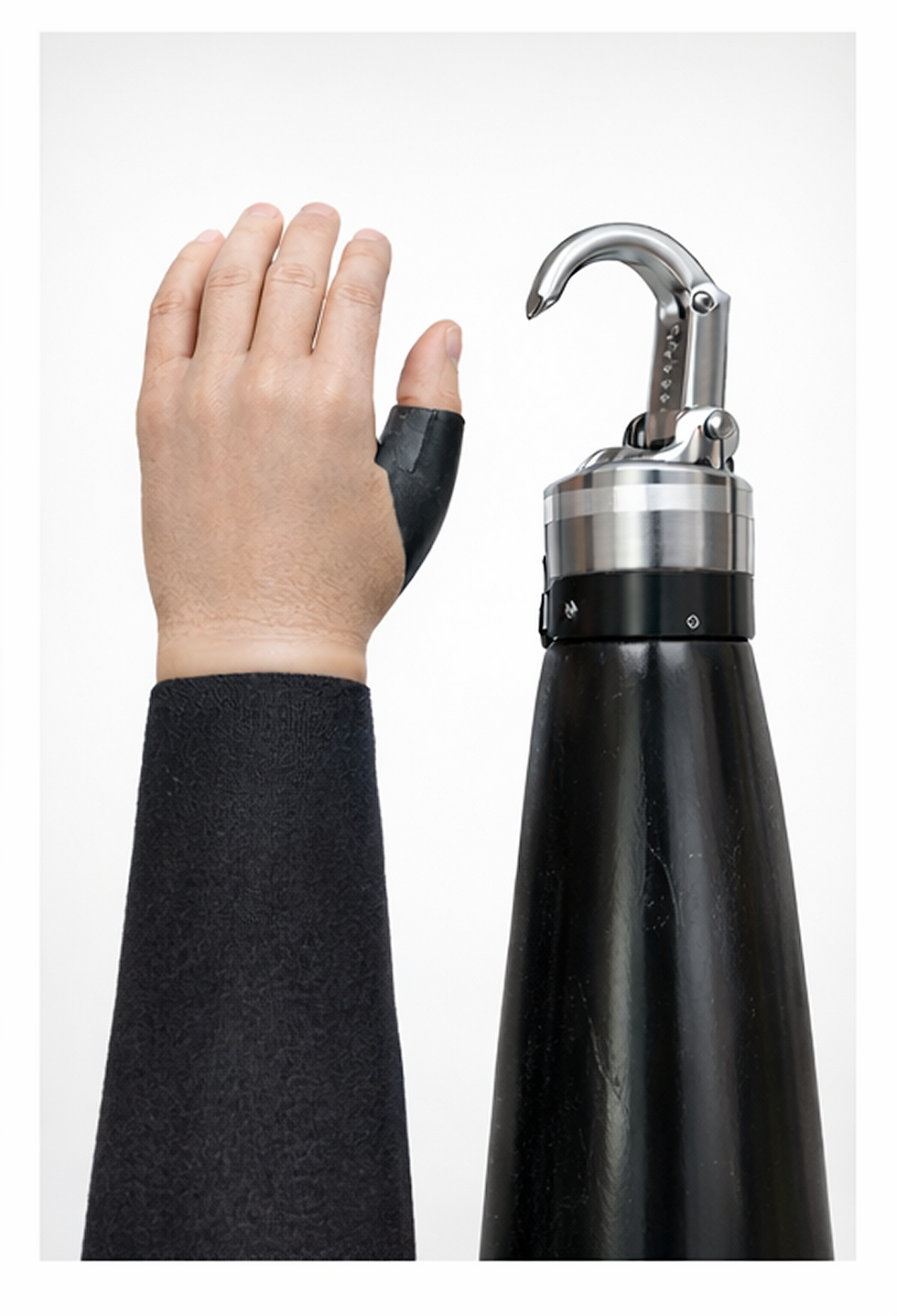
Terminal Device (Hand or Hook)
The terminal device is the functional end of your prosthetic arm, the part that interacts with the world. Terminal devices come in several forms. A prosthetic hand is designed for cosmetic appearance and fine motor tasks like gripping small objects. A hook or split-hook device offers a wider opening and stronger pinch grip, which many users prefer for work or outdoor activities. Advanced multi-articulating hands, such as myoelectric models, feature individually powered fingers that can perform multiple grip patterns.
How Do You Control a Prosthetic Arm?
One of the first questions new amputees ask is: How do I actually make it move? The answer depends on the type of control system your prosthetic uses. There are three primary methods.
Body-Powered Control
Body-powered prosthetics use a cable-and-harness system. When you move your shoulder or upper body in a specific way, the cable transmits that motion to open or close the terminal device. Think of it like pulling a brake lever on a bicycle. Body-powered systems are durable, lightweight, and provide excellent proprioceptive feedback; you can feel the resistance of what you’re gripping through the cable tension.
Myoelectric Control
Myoelectric prosthetics use small sensors (electrodes) embedded inside the socket that detect the electrical signals your muscles produce when they contract. Even after amputation, the muscles in your residual limb still generate these signals. The sensors pick them up, and a microprocessor translates them into commands that move the prosthetic hand, wrist, or elbow. Myoelectric arms offer a more natural appearance and finer motor control, making them well-suited for tasks that require dexterity.
Hybrid Control
Hybrid prosthetics combine elements of both body-powered and myoelectric systems. For example, a patient with a transhumeral (above-elbow) amputation might use body-powered control for the elbow and myoelectric control for the hand. This combination balances weight, functionality, and battery life.
What to Expect From a Modern Prosthetic Arm
Today’s prosthetic arms are more functional, comfortable, and lifelike than at any point in history. Here is what modern technology can offer:
• Multi-articulating hands with individually powered fingers capable of different grip patterns, from a power grip to a precision pinch.
• Pattern recognition systems that use multiple sensors to detect different muscle patterns, making control feel more intuitive.
• Lightweight materials like carbon fiber and medical-grade silicone that reduce fatigue and improve wearability throughout the day.
• Custom cosmetic covers that match your skin tone, giving the prosthetic a highly realistic appearance.
• Activity-specific attachments for sports, cooking, fitness, and other hobbies, so one prosthetic system can adapt to multiple areas of your life.
That said, it is important to have realistic expectations. A prosthetic arm will not replicate 100% of the function of a natural limb. There is a learning curve, and most users need weeks or months of occupational therapy to build proficiency. The good news? With proper training and a well-fitted device, most people go on to perform everyday tasks with impressive skill and confidence.
When Might You Need a Prosthetic Arm?
A prosthetic arm may be recommended if you have experienced amputation at any level of the upper limb from partial hand through the shoulder. Your physician and prosthetist will evaluate your specific situation, including the length and condition of your residual limb, your overall health, and your personal goals.
Prosthetic fitting can begin once your surgical site has healed sufficiently and any post-operative swelling has stabilized. In many cases, the rehabilitation process begins before surgery with pre-prosthetic therapy, which focuses on strengthening the muscles you will use to control your device.
Early prosthetic fitting and training has been consistently linked to higher rates of long-term prosthetic use and better functional outcomes. If you are considering a prosthetic arm, the most important step is connecting with an experienced, certified prosthetist as early in your journey as possible.
Take the First Step With Bionic Prosthetics & Orthotics
At Bionic Prosthetics & Orthotics, our board-certified prosthetists specialize in upper- and lower-limb prosthetic care, with advanced options including myoelectric systems, 3D-printed sockets, and custom activity-specific devices. We serve patients through more than 45 clinic locations across 12 states.
Every person’s journey is different, and we believe your prosthetic solution should reflect your body, your goals, and your daily life. We start with a detailed clinical evaluation, at no charge and work alongside your physician and therapy team to develop a care plan built around you.
Ready to learn more?
Contact Bionic Prosthetics & Orthotics to schedule a complimentary consultation, or use our clinic finder to connect with a certified prosthetist near you.


Comments